You Slept Badly Last Night; Now I’m In Trouble – The Social and Familial Impact of Sleep Deprivation
Posted on | January 13, 2014 | No Comments
You Slept Badly Last Night; Now I’m In Trouble
The Social and Familial Impact of Sleep Deprivation
Ask the most difficult person in your office how well they slept last night, this week, or what their patterns of sleep have been over a lifetime.
Go ahead, it sounds as though you’re really concerned about them. They might like you better and eat you last.
Besides building a better relationship with this daytime ogre, it might open you both up to the possibility that lack of sleep or disturbed sleep can cause a ripple effect that negatively changes our working environment.
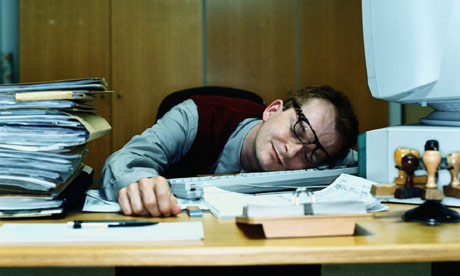
Google Images, 2014
Maria Konnikova’s, Good Night, Sleep Clean, in the New York Times and Ian Parker’s, The Big Sleep, in last month’s New Yorker, provide interesting information on both the theoretical necessity of sleep and Merck’s focus on providing beneficial rest when we need it most. Scientists are honing in on sleep’s place in our lives and how we can achieve it safely.
In my work within male and female residential facilities for a drug and alcohol recovery organization, I witnessed and studied first hand the effects of a bad nights sleep. Given that our clients continued to spend the day together after sharing large comfortable dorm style sleeping arrangements, and then joined various discussion groups; lack of sleep, sleep medications, and the resulting daytime behaviors were common talk fare. And discussions were often negative and blame filled.
Poor sleep resulted in misplaced anger, dysphoria, an inability to function, and a very much-reduced ability to create light social alliances. Even when my therapy clients, and corporate client teams power through on job functions, the all-important social alliances were cut off or jettisoned to maintain degraded attention resources. We have to prioritize our energy usage and daily requirements. Socializing requires as much energy as work and with reduced energy, people do not share, support, or engage at the same level.
We know in our own families that we all avoid the grouch, and “Daddy’s tired” are reasons to look elsewhere for attention. The long-term sleep deprivation resulting in work place stress means we have less for those we love once we are back home.
I’ll continue this report with information on individual sleep cycle interviews and the effects of medications on those who try to maintain the normal day.
Shawn Nichols
Shawnnichols.com
Tags: and blame filled > beneficial rest > better relationship > corporate teams > Daddy’s tired > daytime > degraded attention resources > difficult person > discussion groups > dorm style > drug and alcohol recovery organization > dysphoria > effects of medications > engage > environment > Familial Impact of Sleep Deprivation > Good Night > grouch > Ian Parker > In Trouble > inability to function > individual sleep cycle interviews > lack of sleep > long-term sleep deprivation > Maria Konnikova > Merck > misplaced anger > negative > New York Times > New Yorker > ogre > patterns of sleep have been over a lifetime > residential facilities > share > Sleep Clean > sleep medications > sleeping arrangements > Slept Badly > social > social alliances > socializing > support > The Big Sleep > therapy clients > work place stress means
Comments
Leave a Reply
Categories
Recent Posts
Meta
@DrShawnNichols
 Help Chat Online.Com
- Dealing with Death’s Vortex
- Assessing Your World View- The Sand Castle
- Enlightenment and Addiction on the Internet: Neural Receptors Ramp Up
- The Perversity of Education
- Saul Bellow’s notion, “Warehouse of Good Intentions”.
- I Walk In Two Worlds But Neither Is Home.
- Talking to yourself? It’s called a soliloquy..
- The Put-Up and Smack-Down in One Sentence. A Power Trip.
- Elegy for Future Gun Victims – We are so sorry.
- Bam Bam Style Leadership and Management